
The CBD market has seen significant growth in recent years, drawing interest from both buyers and investors due to increased awareness of its health benefits and therapeutic uses.
This article looks at the current state of the CBD industry, focusing on what is driving its growth, such as changing regulations and shifting consumer preferences .
Examining the main companies in the market shows the difficulties they encounter, such as rules and following regulations, and the possibilities ahead. opportunities for expansion in international markets.
There is also a discussion on what the future might hold for this dynamic sector.

Join us as we unpack the trends shaping the CBD market today.
The Growth of the CBD Market
The CBD market has grown significantly in the past few years because more people are interested in cannabidiol (CBD) and its health advantages. This market growth can be attributed to a variety of factors, including the legalization of hemp products across various regions and a growing awareness of the therapeutic uses of CBD in wellness products, tinctures, oils, and even skincare.
We are seeing changes in the retail market and new trends that indicate strong possibilities for ongoing growth in the industry.
Overview of the CBD Industry
The CBD industry encompasses a diverse range of products, including tinctures, oils, edibles, and CBD-infused beverages, catering to various consumer demographics and preferences.
This growing market draws people focused on health who want help with anxiety, long-term pain, and sleep problems. It attracts people interested in different health choices and curious about new products like full-spectrum CBD, broad-spectrum CBD, and CBD isolate formulas.
Growth trends indicate a significant increase in sales as awareness surrounding the potential benefits of CBD heightens. Recently, the market has introduced new product formulas, such as nanoemulsion technology, that help the body absorb substances better.
Segmentation based on age and lifestyle is evident, with younger consumers favoring trendy, consumable options like gummies and older demographics leaning towards traditional tinctures and topicals.
As rules change, more customized products will probably appear, giving consumers a wider range of choices.
Factors Driving the Trend
Several key factors are driving the trend of CBD market growth, including the increasing consumer demand for natural health solutions, heightened awareness of the health benefits associated with cannabidiol, and the favorable regulatory environment that supports legalization.
Legality and Regulations
The legality of CBD products varies significantly from one region to another, influenced by local regulations, advertising regulations, and public health policies that dictate the sale and distribution of hemp-derived products.
As businesses look to enter this growing market, they must deal with a mix of laws that can vary between countries, states, and cities.
These differences make it hard to create complete plans for entering the market because companies have to keep up with changing laws, like rules for labeling and dosage limits.
Dealing with these regulations often involves many difficulties, including meeting strict compliance rules and handling the risks of possible legal consequences.
Public opinion is important, as it affects regulations. Lawmakers adjust rules based on how people feel about hemp products, which can impact market chances and consumer confidence.
Consumer Demand and Preferences
Interest in CBD products has grown as people look for natural health options. Many are especially interested in the health benefits of different products like oils, edibles, and creams.
As consumers become increasingly aware of the diverse options available in the CBD market, their preferences are guiding brands to innovate and expand their product lines to meet specific needs.
This is coupled with a growing emphasis on ingredient transparency, as customers desire to know exactly what they’re putting into their bodies. Safety concerns surrounding product quality and authenticity have led consumers to scrutinize brands more carefully, ultimately impacting their purchasing decisions.
When brands focus on high standards and clearly share detailed information about what they use and where they get it, they build trust and increase loyalty. As a result, the mix of what consumers want and safety issues is changing the CBD market.
Current State of the CBD Market
The CBD market is growing quickly. It has many competitors, including well-known brands and new companies.
Sales are made through online stores, retail partnerships, and direct-to-consumer methods.
CBD Market Data 2024
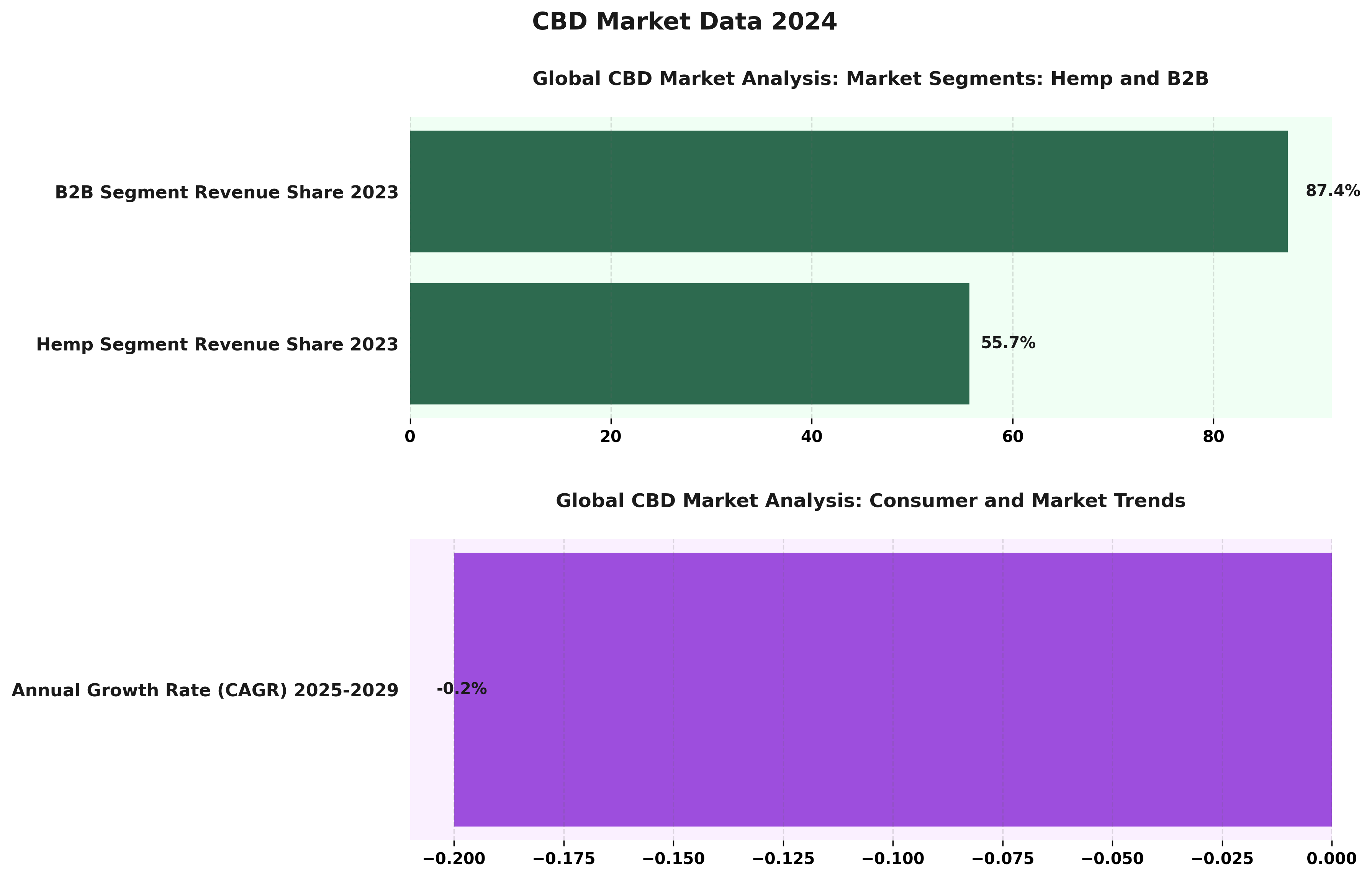
The CBD Market Data 2024 offers insightful analysis into the global CBD market’s dynamics, focusing on revenue distribution across segments and growth expectations. The data highlights key market segments, specifically the hemp and B2B sectors, and provides a glimpse into projected consumer and market trends.
Within the Global CBD Market Analysis , the Hemp Segment commands a significant 55.7% revenue share in 2023 . This indicates hemp’s prominence as a primary source for CBD extraction, driven by its legal acceptance in various regions and its versatility in product formulation. Hemp-derived CBD products are favored in markets with restrictive cannabis laws, contributing to this substantial revenue share.
Moreover, the B2B Segment exhibits an even more dominant position, with an 87.4% revenue share in 2023 . This underscores the significant role of B2B transactions in the CBD industry, encompassing bulk sales to manufacturers, distributors, and product developers. The high percentage reflects the industry’s reliance on wholesale operations to supply a diverse range of CBD-infused products, from wellness and beauty to food and beverage sectors.
Looking ahead, the Consumer and Market Trends indicate an anticipated -0.2% annual growth rate (CAGR) from 2025 to 2029 . This projected decline suggests potential market saturation or regulatory challenges impacting growth. It also highlights the necessity for innovation and diversification within the industry to sustain consumer interest and market expansion. Factors like changing customer tastes, competition, and new laws might lead to this slight decrease.
To sum up, the CBD Market Data 2024 shows a strong industry mainly led by the hemp and B2B segments. Even with strong revenue shares, the predicted drop in growth highlights the need for changes in strategy and new ideas in the market to keep progress going in this constantly changing industry.
Key Players and Market Share
Main businesses in the CBD market include big, well-known companies and new, creative startups. They all compete for customers and look for ways to get more funding to grow, leveraging e-commerce and digital marketing strategies.
These companies use different methods, such as improving product lines with top-quality formulas and new extraction methods, focusing on specific market segments like niche markets, and running broad marketing campaigns to reach consumers.
Big companies have gained large market shares by using their distribution networks and customer loyalty. Meanwhile, newer companies often use flexible methods to challenge traditional ways.
The wave of company mergers and purchases in this area is changing the business scene, as firms join forces and share knowledge to speed up their growth paths.
Venture capital is very important in this fast-changing industry. It gives the necessary money to support new ideas and grow the market, helping the CBD industry progress overall.
Challenges and Opportunities in the CBD Market
The CBD market offers many chances for growth and expansion, but it also encounters major difficulties, such as regulatory challenges, market crowding, and ongoing issues with public perception and consumer safety that can affect sales and brand reputation.
Obstacles to Growth
Obstacles to growth in the CBD market include stringent business regulations, fluctuating public perception, and potential legal challenges that can impede market entry and expansion.
These challenges often make it difficult for businesses to manage the compliance rules and also deal with the doubts some consumers might have about CBD products.
Challenges such as different state laws and changing federal rules can create confusion, making it hard for companies to plan for long-term investments. Negative perceptions fueled by misinformation about CBD’s effects can deter potential customers.
To tackle these issues, companies are focusing on transparency in product labeling, investing in educational campaigns to inform the public about the benefits of CBD, and actively engaging with regulators to help shape more favorable policies.
Potential for Market Expansion
The potential for market expansion in the CBD sector is significant, driven by trends in product innovation, sustainability, and the increasing acceptance of hemp products among consumers, along with investment opportunities in secondary markets like health food stores and cannabis dispensaries.
This growing field offers many chances for businesses wanting to put in money and try new things.
Companies that focus on sustainable sourcing and environmentally friendly practices can gain a competitive edge. For instance, tapping into the demand for organic CBD oils and edibles could attract health-conscious consumers who prioritize eco-friendly products.
There’s an increasing interest in alternative delivery methods, such as CBD-infused beverages and topical applications, which provide unique consumer experiences. By matching their products with what customers want, brands can succeed in this fast-changing CBD market where product innovation is key.
The Future of the CBD Market
The outlook for the CBD market looks positive, with predictions indicating consistent growth due to increasing consumer interest, continuous new product development, and greater presence in health and wellness sectors driven by the hemp industry and legalization efforts.
Predictions and Projections
Predictions for the CBD market show strong growth in the coming years. Experts expect more spending by consumers on CBD products and a wider variety of products designed for particular health benefits, including tinctures, edibles, and topicals.
As consumers pay more attention to their buying choices, businesses need to focus on quality standards and come up with new marketing strategies to meet changing tastes, leveraging e-commerce and social media influence.
Market predictions indicate a growing demand for organic and sustainably sourced products. There’s also a rising interest in clear labeling and information about their advantages, as consumers look for more knowledge and clarity about how products are sourced and how well they work.
Companies that adjust to this change by being open and using customer feedback, while incorporating consumer demographics and social media influence into their strategies, will likely improve their market position.
As prices change due to supply chain problems and new rules, businesses need flexible pricing plans to handle these changes and maintain steady growth in the competitive CBD market.
Frequently Asked Questions
What is the trend in the CBD market?
The trend in the CBD market is continually growing and expanding due to the increasing popularity and consumer demand for natural remedies, driven by the therapeutic uses of cannabidiol and other cannabinoids.
Why is the CBD market experiencing such growth?
The growth in the CBD market can be attributed to the increasing acceptance and legalization of CBD products, as well as the growing awareness of its potential health benefits and economic impact on the wellness products sector.
What products are considered part of the CBD market?
CBD products come in a variety of forms, including oils, tinctures, edibles, topicals, and even pet products. They can also be found in beauty and skincare products, catering to diverse consumer demographics and lifestyle integration.
Are there any regulations in place for the CBD market?
Yes, the CBD market is subject to regulations and laws set by the Food and Drug Administration (FDA) and individual state governments. It is important to research and purchase CBD products from reputable and legal sources, considering legal considerations and advertising regulations.
What is the expected growth for the CBD market in the coming years?
According to market research, the CBD market is expected to reach a value of $16 billion by 2025. This shows the continued growth and potential for the industry, highlighting significant investment opportunities and market maturity.
What are the main factors driving the trend in the CBD market?
The main factors driving the trend in the CBD market include the increasing consumer interest in natural and alternative health remedies, the growing acceptance of CBD, and the potential for financial success in the industry, fueled by market trends in international markets and secondary markets like cannabis dispensaries and health food stores.