

As the rules around cannabis legalization keep changing across the United States knowing the legal rules about cannabis in your state is crucial , especially for those involved in cannabis reform and voter initiatives.
This article explores the laws and regulations governing cannabis, highlighting current trends and the potential for future legalization , including the impact on the cannabis industry and cannabis entrepreneurship.
We discuss the risks associated with cannabis involvement , including legal ramifications and health concerns, such as cannabis safety and cannabis compliance.
Guidance is provided on how to engage with the cannabis community, even in non-legal states, through advocacy, education, cannabis networking, and exploration of hemp products .
Whether you’re new to this or have a lot of experience, you will find something here for you, including cannabis education programs and cannabis awareness campaigns. everyone .
Knowing the Legal Rules for Cannabis in Your State
Knowing the legal status of cannabis in your state is important for both new and experienced users. It includes state laws, changes in cannabis policies, cannabis legislation updates, and the current movements towards cannabis legalization, which have changed how society sees cannabis use.
Each state has its unique laws and policies that govern the use, sale, and possession of cannabis, making it essential to stay informed about these legal frameworks to avoid illegal cannabis activities and to understand the rights you have as a cannabis advocate or consumer, including compliance with cannabis permits and cannabis licenses.
Laws and Regulations
Learning the cannabis laws and state rules can be tough. Many areas have confusing regulations, impacting legal rights and compliance for both businesses and consumers, especially those involved in the cannabis trade and cannabis retail.
The laws about cannabis differ greatly between states, causing confusion and uncertainty for people in the industry, particularly those involved in cannabis manufacturing and cannabis distribution.
For instance, some states have implemented strict regulations surrounding cannabis cultivation and distribution, while others are more lenient, allowing for broader access and usage.
These discrepancies often allow individuals and businesses to exploit legal loopholes, leading to potential compliance issues that can result in hefty fines or loss of licenses, affecting cannabis businesses and cannabis owners.
Knowing the details of local laws and following compliance rules is essential for success in this changing market, particularly for those involved in cannabis quality control and cannabis testing.
Current Trends and Possibilities for Legalization
Current trends in cannabis legalization indicate a growing acceptance and push for reform across the nation, driven by ongoing legalization efforts, increased cannabis advocacy, and a surge in cannabis news coverage that informs the public about the benefits and potential of cannabis, including cannabis tourism and cannabis global markets.
This changing situation shows a major change in how people feel, as more individuals and communities see the health, financial, and social benefits of legal cannabis, contributing to the growth of cannabis markets and cannabis investment opportunities.
Groups such as the Marijuana Policy Project and NORML are important as they gather support and work to change laws, while also informing people about past wrongs linked to the banning of cannabis, promoting cannabis social impact and cannabis rights.
Campaigns in different states focus on recreational use and work to improve social fairness, trying to fix the negative effects on disadvantaged groups, including efforts to address cannabis social equity.
As views change, experts believe there will be more updates to cannabis laws, which might include easier access and new rules for safe use, benefiting cannabis consumers and the broader cannabis culture.
Cannabis Legalization and Reform Status 2024
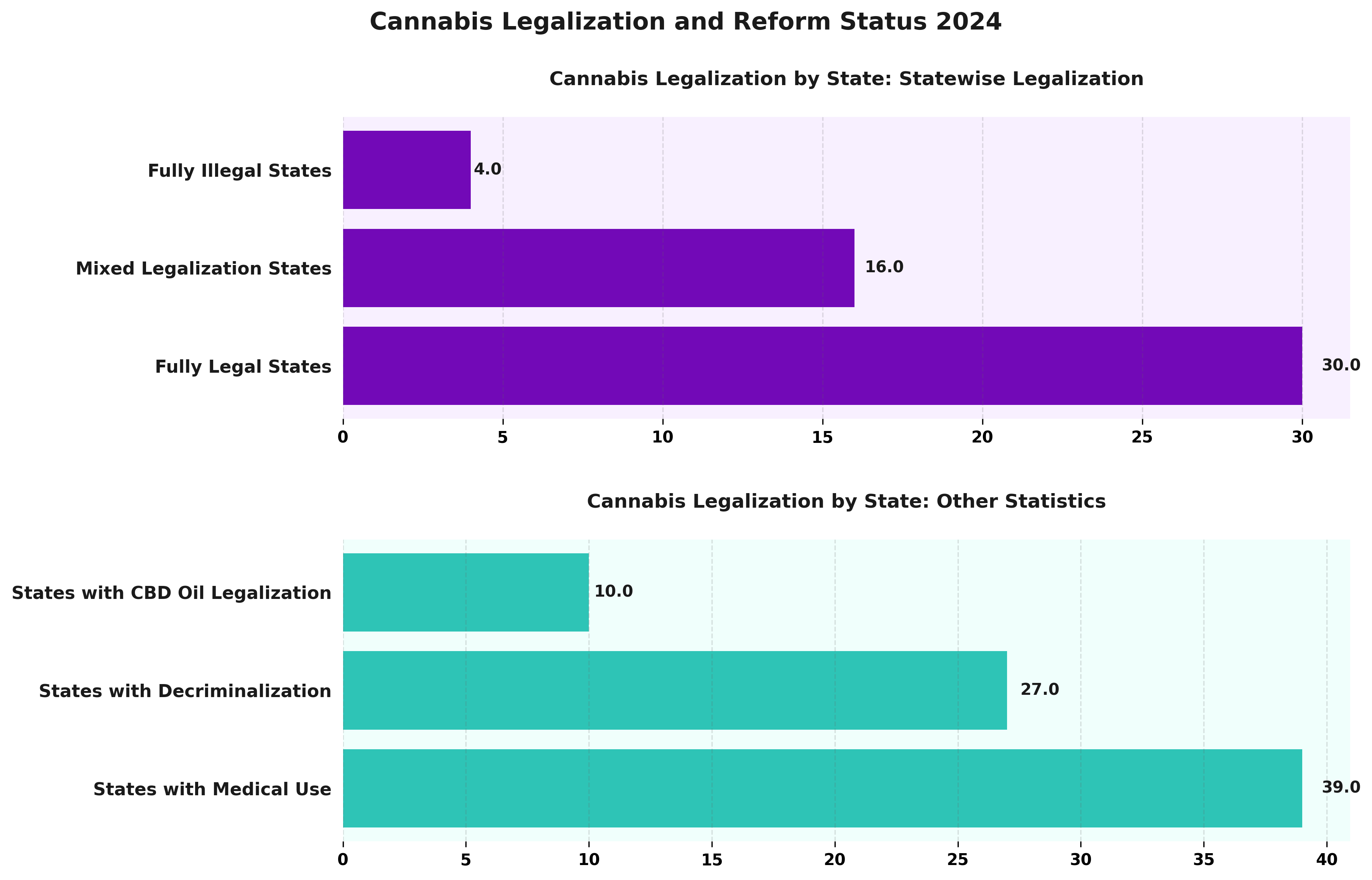
The Cannabis Legalization and Reform Status 2024 shows the present state of cannabis laws across the United States. This data shows changes in laws, indicating important changes in how society and lawmakers view cannabis, and the effects this has on cannabis rules and laws.
Cannabis Legalization by State reveals that 30 states have fully legalized cannabis , indicating a growing acceptance of its recreational and medicinal use. This shift suggests an increasing recognition of cannabis’s potential economic, medical, and social benefits, contributing to tax revenue, healthcare options, and social justice reforms, promoting cannabis business and cannabis entrepreneurship.
- Mixed Legalization: 16 states have adopted mixed legalization, where cannabis might be legal for medical use but restricted for recreational purposes. These states often allow possession with a prescription, highlighting a cautious approach that balances public health concerns with the benefits of medical cannabis and legal alternatives.
- Fully Illegal States: In contrast, 4 states remain fully illegal concerning cannabis use. These states adhere strictly to federal prohibition, typically due to political, cultural, or social factors influencing legislative processes, limiting access to cannabis support groups and cannabis organizations.
Further insights from Other Statistics show that 39 states permit medical cannabis use , reflecting widespread acknowledgment of its therapeutic potential. This acceptance underscores cannabis’s role in pain management, epilepsy treatment, and other medical conditions, promoting cannabis research and cannabis education.
- Decriminalization: 27 states have decriminalized cannabis, reducing penalties for possession and use. This trend points to a shift towards treating cannabis use as a public health issue rather than a criminal one, aiming to reduce incarceration rates and associated societal costs, and supporting cannabis charities and cannabis community service.
- CBD Oil Legalization: 10 states have specifically legalized CBD oil, which lacks psychoactive effects, indicating acceptance of cannabis derivatives for health benefits without recreational use implications, fostering the growth of legal measures for cannabis applications.
Overall, the Cannabis Legalization and Reform Status 2024 emphasizes a significant move toward broader legalization and reform. This change looks at different parts of cannabis use, concentrating on health, economic advantages, and fairness. It will affect upcoming cannabis laws in the U.S. and opens up chances for consulting and activism in the cannabis industry.
Potential Risks and Consequences of Involvement with Cannabis
While cannabis has been increasingly recognized for its potential health benefits and therapeutic uses, it’s essential to consider the potential legal and health risks associated with cannabis involvement, especially in areas where the cannabis trade remains illegal or unregulated, and the importance of cannabis safety and cannabis quality control.
Legal and Health Risks
Knowing the legal and health risks of cannabis is important for anyone dealing with cannabis. This knowledge helps people make informed decisions about using cannabis safely. It also includes being aware of cannabis laws and regulations.
As cannabis laws change in different places, users should know that having, using, or selling cannabis can lead to different legal outcomes depending on the location, and the potential need for cannabis licenses and cannabis permits.
Plus potential legal repercussions such as fines or criminal charges, studies have shown that regular cannabis use can lead to negative health outcomes, including impaired cognitive function and increased likelihood of mental health disorders, highlighting the importance of cannabis education and cannabis awareness.
According to a report from the National Institute on Drug Abuse, about 9% of users develop a dependency, and this figure rises to 17% for those who begin using in their teens, emphasizing the need for cannabis support groups and cannabis education programs.
Therefore, educating oneself about responsible cannabis use can help mitigate these risks while promoting a safer, informed community, through initiatives such as cannabis workshops and cannabis advocacy.
Ways to Get Involved with Cannabis in Non-Legal States
Even in places where cannabis isn’t legal, there are many ways to join the cannabis community through advocacy, education, and grassroots movements that support cannabis culture and push for change, including cannabis activism and cannabis grassroots movements.
Advocacy and Education
Advocacy and education are important in moving the cannabis movement forward. They help people learn about the benefits of cannabis and support positive change, through initiatives such as cannabis documentaries and cannabis publications.
Using social media sites, community workshops, and involving local leaders can help improve knowledge about cannabis-related topics, and promote cannabis forums and cannabis blogs.
By sharing success stories and research-backed information, advocates can dispel misconceptions and demonstrate the therapeutic potential of cannabis, promoting cannabis influencers and cannabis social clubs.
Grassroots campaigns can also help to mobilize communities, encouraging conversations around personal experiences with cannabis and highlighting its legislative importance, through cannabis networking events and cannabis symposia.
Working together with healthcare workers can offer reliable information about health advantages. Well-planned events can offer secure environments for discussions, helping to create a community that is more knowledgeable and supportive, through cannabis employment and cannabis careers.
Supporting Legalization Efforts
Supporting the effort to legalize cannabis is important for progress. It unites advocacy groups and promotes fairness in the cannabis industry, supporting cannabis rights and cannabis consumer protection.
People can make a big difference by getting involved with local and national advocacy groups that share their values, and participate in cannabis voter initiatives and cannabis policy discussions.
Engaging in civic activities, such as attending town hall meetings or participating in community forums, elevates the conversation around cannabis policies and allows for meaningful dialogue concerning necessary changes, fostering cannabis awareness and cannabis public engagement.
Making sure social fairness is part of these policies is important. It guarantees that communities who were unfairly affected by previous cannabis laws are given attention and importance in changes to the laws, promoting cannabis social equity and cannabis social impact initiatives.
By spreading awareness, sharing personal stories, and staying informed on the latest developments, individuals help create a more inclusive and fair cannabis industry, supporting cannabis consulting and cannabis activism.
Exploring Hemp Products
Exploring hemp products is a fantastic way to engage with the cannabis community while adhering to legal standards, as hemp offers a plethora of cannabis products and accessories that promote wellness and sustainability, supporting cannabis business and cannabis lifestyle.
Hemp can be used in many ways, including making different types of fabrics, creating plastics that break down naturally, producing health supplements, and making healing oils. Enthusiasts and advocates alike find a shared appreciation for hemp’s eco-friendly properties, highlighting how its cultivation requires fewer resources compared to traditional crops, thus contributing to environmental preservation. Hemp products also play a key role in the cannabis industry, offering legal alternatives and promoting cannabis education.
Hemp is important and beneficial to the cannabis community and represents a move toward healthy and responsible living. This interaction creates a sense of community, motivating people to live in harmony with nature and focus on their health. The growth of hemp supports cannabis advocacy and helps push for cannabis legalization and cannabis policy reform.
Participating in Online Communities and Cannabis Networking
Joining online groups and cannabis forums offers a great place for cannabis fans to exchange information, teach others, and create a community of teamwork and help. These platforms are essential for cannabis networking and staying informed about cannabis trends and cannabis legislation updates.
By engaging actively on social media platforms, individuals can connect with like-minded people who share their passion for cannabis. Forums and discussion groups are helpful places where people can ask questions, share tips, and talk about recent news in the industry, including cannabis cultivation, cannabis research, and cannabis reform.
Connecting in these areas increases learning and helps cannabis education by using many different experiences and information. Sharing personal stories and offering guidance helps build a sense of belonging and can clear up misunderstandings. It’s important for active members to provide guidance while promoting responsible behavior and wise decisions, while also advocating for cannabis rights and cannabis social equity.
Frequently Asked Questions
Can I still get involved in the cannabis industry if it isn’t legal in my state?
Yes, there are still ways to get involved in the cannabis industry even if it isn’t legal in your state. One option is to participate in the industry in a legal state, such as by investing in a cannabis company, exploring cannabis tourism, or working for a company that operates in a legal state. Engaging in cannabis activism and supporting cannabis charities can also help support the industry from afar.
Are there any risks involved in getting involved in cannabis in a state where it isn’t legal?
Yes, there are potential cannabis risks involved in participating in the cannabis industry in a state where it isn’t legal. These risks may include legal consequences, potential backlash from the community, and challenges with state regulations and compliance.
What are some ways I can support the cannabis industry in a state where it isn’t legal?
You can support the cannabis industry in a state where it isn’t legal by advocating for legalization, donating to organizations that work towards legalization, and educating yourself and others about the benefits of cannabis.
Can I still use cannabis if it isn’t legal in my state?
No, it is illegal to use cannabis in a state where it isn’t legal. However, you may be able to use CBD products, such as CBD oil, which contain no or very low levels of THC, the psychoactive compound in cannabis. Exploring medical cannabis options in states where it is legal can also be a viable alternative.
Are there any online communities or forums for people interested in the cannabis industry in illegal states?
Yes, there are online communities and forums where people interested in the cannabis industry in illegal states can connect, share information and resources, and support each other. These communities can be found on social media platforms and specialized websites and often focus on cannabis culture, cannabis lifestyle, and cannabis advocacy.
What steps can I take to help legalize cannabis and support cannabis activism in my state?
You can help legalize cannabis in your state by educating yourself about the issue, talking to your local lawmakers, joining or supporting organizations that advocate for legalization, and participating in rallies or events to raise awareness about the benefits of cannabis. Engaging in voter initiatives and supporting advocacy groups are also effective ways to push for cannabis reform and decriminalization.